 Painter
|
Interview with RIA Novosti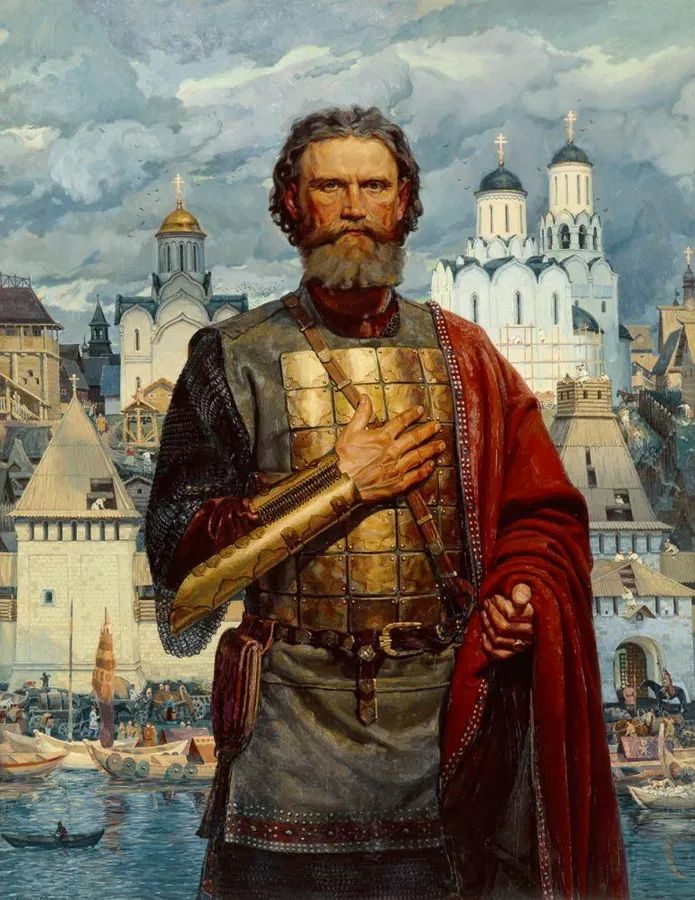 MOSCOW, September 5 – RIA Novosti. The conclusion of anthropologists who have studied the relics of Dmitry Donskoy coincides with the image reflected in the famous painting «Holy Blessed Grand Prince Dmitry Donskoy of Moscow» by historical painter Victor Matorin. Matorin himself told this to a RIA Novosti correspondent. This painting (oil on canvas) was first shown in 2002 and became one of the most popular historical portraits of Dmitry Donskoy. «Yes, my vision of the Grand Duke aligns with the experts' conclusions, but for an artist, that is not the main point: when painting the picture, I was not concerned with the exact shape of my subject's skull, his height, weight, and so on – what inspired me was his true spirit», he said, emphasizing that the portrait he created is not a historical document, but an artistic image expressed in the language of painting.
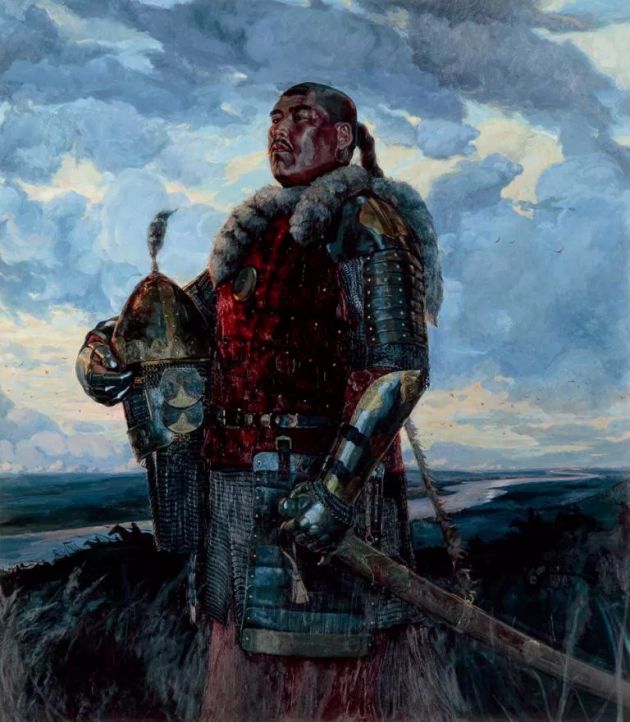
«Of course, I tried to capture a certain external image and convey the Grand Duke's individual facial features. I looked through everything that had been written before me. I studied the canonical images kept in the Kremlin. Dmitry's facial features are rendered quite specifically, but this is a composite image of everything I have absorbed», the painter said. He also admitted that while he was working on the painting, many people asked him: «Why does the prince have such large hands?» He always replied: «What kind of hands could he have? To personally take part in and achieve a crushing victory at the Battle of Kulikovo, the prince needed very strong, manly hands.» According to Matorin, a certain image emerged in his mind – that of a ruler, builder, creator, ideal leader, and father... «I am not turning him into some kind of Schwarzenegger. It is about something else: a person's spiritual strength, about faith... With him, it is like being behind a stone wall. We are all protected. Yes, Dmitry Donskoy is a warrior – that is why he stands in armor – but he is not a warrior-aggressor; he is a warrior-defender», Matorin shared his impressions of the hero. He also mentioned that almost simultaneously with the portrait of Dmitry Donskoy, he painted a portrait of Mamai (the painting «Khan Mamai.» 2004. Oil on canvas). «An artist always conveys their attitude toward the subject. I am no exception. In my painting, Mamai is a true force, and we defeated that force. This should be regarded with great respect. We won! What strength of spirit! What faith! What a people!» the artist added.
According to him, when creating the series of paintings dedicated to the Battle of Kulikovo, he was greatly influenced by the Ilya Glazunov Russian Academy of Painting, Sculpture and Architecture, where he completed a workshop in religious and historical painting.
«In Russia, belonging to a particular art school is an ideology, and this ideology – the glorification of the origins of Russian statehood and its heroes – is fully manifested in this cycle of works», he explained, suggesting that this is precisely why the artistic image of Dmitry Donskoy he created resonates with people's hearts. Matorin admitted that the discovery of Dmitry Donskoy's relics inspired him so much that he decided to continue this historical theme in his works. «I am not going to repaint the portrait of Donskoy based on scientific studies of his remains. I don't need that. Right now, what interests me is creating the image of Princess Evdokia, Dmitry Donskoy's wife», he said, adding that such a female image is currently much in demand in art – the mother, the keeper of the hearth, the inspiration for feats of arms. Svetlana Guseva, a Candidate of Historical Sciences and cultural critic who oversees Victor Matorin's exhibitions, told RIA Novosti that the author's version of the painting «Holy Blessed Grand Prince Dmitry Donskoy of Moscow» is currently on display at the exhibition in the St. Petersburg State Museum-Institute of the Roerich Family. «The artist deliberately departed from the established iconography of the warrior prince. In Dmitry's hands there are no weapons, and in the background – not the Battle of Kulikovo, but the Moscow Kremlin under construction», she commented on the work in an interview with RIA Novosti. «This is not a military commander, but a state builder. A symbol of unified authority and peaceful creation. And this idea echoes the Roerichs' philosophy: 'When construction is underway – that is real life,'» the cultural critic noted.
The paintings from Victor Matorin's Kulikovo Cycle are on permanent display at the State Military-Historical and Natural Museum-Reserve «Kulikovo Pole», located in the Tula Region on the site of the battle. Source:RIA Novosti |